The aircraft is the compute.
Detection happens on the drone itself. Not in a foreign cloud, not on a shared server, not on a black-box API. The perimeter watches itself — and the record of what it saw stays where you can point to it.
Detect
Dual visible-light and long-wave thermal imagers with solid-state LiDAR. The aircraft sees at night, through dust, and across the temperature difference between a person and the ground behind them.
Analyze
On-board perception runs classification and tracking with no ground-link dependency. A person, a vehicle, a fence break, a hotspot on an inverter — categorised at the aircraft, not shipped raw to a cloud.
Respond
The event, its classification, and the frame it was seen in are handed to your existing VMS and dispatch. Your operator confirms and acts. Nothing new to learn.
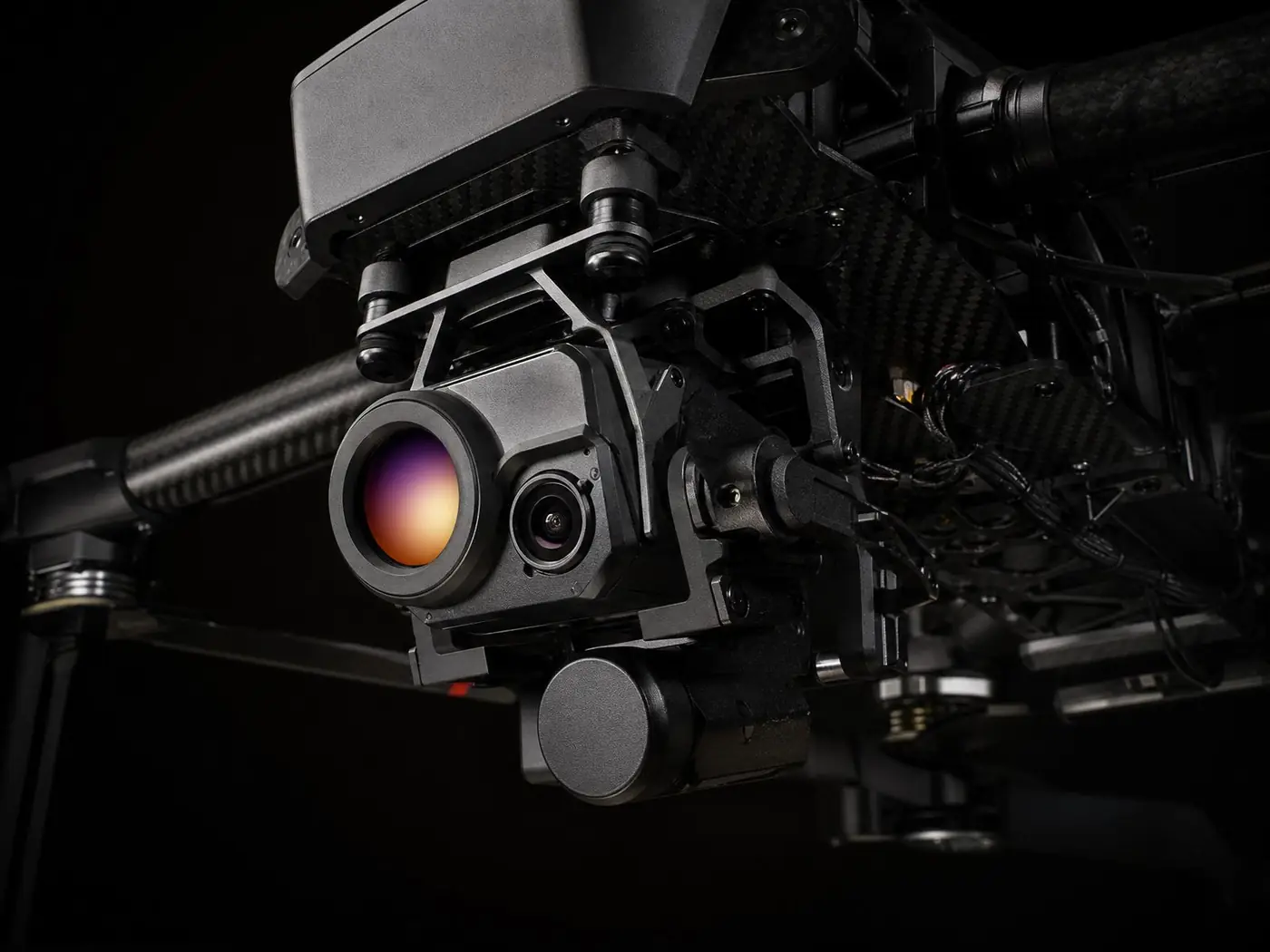
Where classification happens is a trust decision.
Foreign platforms ship footage upstream to make decisions. That is a bandwidth requirement, a latency cost, and — depending on the platform — a jurisdictional question about who has your data. Rakshak classifies on the aircraft. What leaves the drone is a structured event and a specific frame, not a raw video firehose.
Reliability at night and in bad weather.
Long-wave thermal sees at night by design; it does not need visible light. Airframes are IP54-sealed for dust and rain. Flight profiles adapt to wind, and the dock is the aircraft's shelter — not a hangar somewhere else on site.
This will just be another system for the team to learn.
Rakshak integrates into your existing VMS and dispatch. Events land where your operator already looks. There is no separate Rakshak dashboard to train two shifts of staff on.
Is this even legal in Indian airspace.
Flight operations are engineered to DGCA requirements, including BVLOS profiles under active certification. Airspace clearance is part of the deployment process, not the customer's problem. TODO: confirm exact certification wording with regulatory counsel before launch.
What happens to the recordings.
Everything is processed on the aircraft and stored on customer-controlled infrastructure in India. We do not host your footage in a foreign cloud, and we do not use it to train external models.
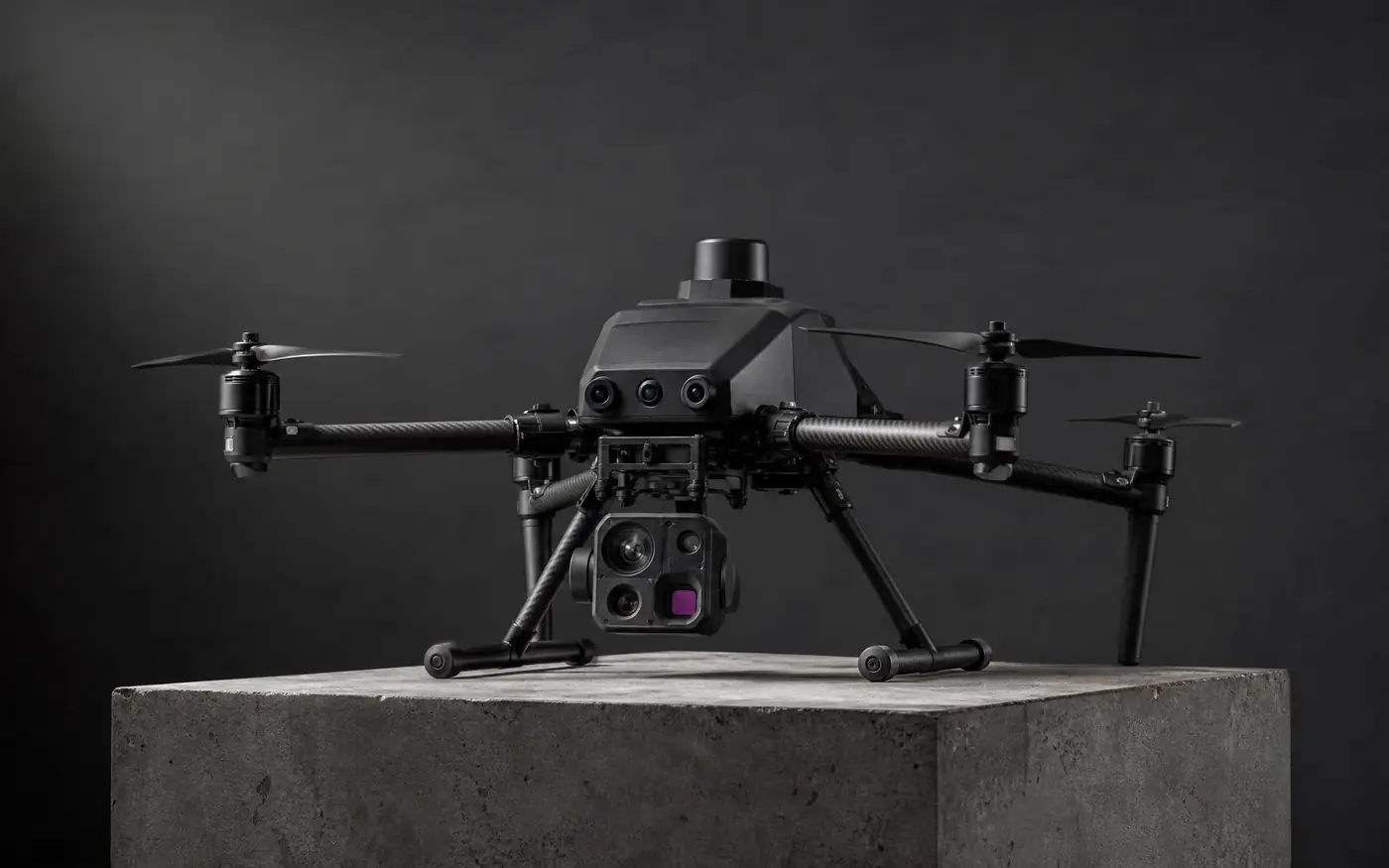
Rakshak Mk-I. Built and serviced in India.
- · Unibody carbon-fibre chassis, field-serviceable rotor arms
- · IP54 sealing against dust and rain
- · 52 minutes on a single pack; hot-swap dock returns to patrol in ~90 seconds
- · Encrypted mesh radio with 4G/5G fallback
- · Engineered to DGCA BVLOS; certification in process
Two weeks. One gate. A signed decision date.
A scoped, paid evaluation at a single zone or gate you choose, alongside your existing guards and CCTV. Success criteria, decision date, and contract price are agreed in a short evaluation agreement before we deploy. The deployment fee is credited in full against your first-year contract if you move forward. We run a limited number of evaluations per quarter.